Olga stepped out of the office for the last time, clutching a small box of her personal belongings. The October wind tangled her hair, and for the first time in years, her chest felt light. No regrets. No doubts. Only relief.
Seven years. Seven years of giving everything to a company—and to everyone else—while barely thinking of herself. Every paycheck disappeared before she could even consider spending on herself. Her mother-in-law, Valentina Sergeyevna. Her husband’s sister, Lena. Nephews, bills, groceries, medicines, school supplies. The list never ended.
It had started slowly. The moment she married Pavel, Valentina Sergeyevna made it clear that a daughter-in-law’s purpose was to be useful. Not in words—she didn’t need them. Valentina had a way of speaking that made refusal impossible.
“Olenka, the utility bills came. My pension isn’t enough. Could you help? I’ll pay you back, I promise.”
She never paid her back. The requests only grew.
“Olenka, Lena’s kids need school supplies. You know how expensive it is. Could you send some money?”
“Olenka, the doctor prescribed expensive medication. Help me, dear.”
At first, Olga believed she was helping family. That it was what she was supposed to do. Pavel always nodded when his mother called, saying,
“Come on, help my mother. She’s all alone.”
Alone. Valentina Sergeyevna wasn’t alone—she had a daughter, Lena, working in a store, who never lifted a finger. Somehow, it seemed, it was always Olga’s job.
So Olga sent the money. Paid the bills. Bought the groceries. She even listened to endless stories about neighbors, health, and how hard life was on a single pension.
“Maria Ivanovna’s son visits every week, brings gifts. And my Pavel forgets his mother entirely.”
Olga stayed silent. Pavel hadn’t forgotten. He just knew she would handle it all.
Over time, the demands grew. Gratitude vanished. Money was expected, as if it weren’t her salary at all, but a family resource she was meant to feed from.
Even Lena got used to it. Monthly calls, always with a request:
“Olya, send money for the kids. They need shoes. Jackets. Activities.”
Their children were healthy, well-fed, with the latest smartphones. Still, it was never enough. Olga sent the money because saying no meant hearing Pavel’s familiar words:
“What’s the harm? They’re just children.”
Children. Other people’s children, whom she saw maybe twice a year. But refusal was impossible.
Three years ago, Pavel lost his job. “Temporary,” he said. “I’ll find something better soon.” Temporary stretched on. He searched half-heartedly, turned down low-paying jobs, waiting for the perfect one.
Meanwhile, Olga carried everything alone. Not just their own expenses, but his family’s too. Valentina Sergeyevna didn’t ask less. She asked more.
“Olenka, you understand it’s hard for Pavel right now. I don’t want to upset him. You’ll help, won’t you?”
She helped. Because she was tired. Tired of arguing. Tired of explaining there wasn’t enough money. Tired of hearing, “Family comes first.”
Pavel stayed silent. He sat at the computer, job-hunting—or playing games. When Olga tried to say she couldn’t carry everyone alone, he waved it off:
“You’re exaggerating. Mom just asks a little. Lena’s life is hard too.”
A little. Olga calculated once. Nearly a third of her salary went to Pavel’s family each year. A third. And then there were mortgages, food, clothes, gas. Barely anything left for herself.
When she bought a new coat, Valentina Sergeyevna looked at it and said,
“Expensive, I bet. I can’t even afford my medicine.”
Olga clenched her fists but stayed silent.
Summer came, and Lena asked for money for a vacation for the children. “They’re tired. They need the sea.”
Olga sent the money. Lena didn’t repay. She sent photos instead: children on the beach, eating ice cream, riding banana boats.
Olga stayed home. Her vacation was at a friend’s summer house. No money for the sea.
Pavel said,
“So what? We’re fine here.”
Fine. Olga wasn’t.
By September, Valentina Sergeyevna asked for bathroom repairs. The pipes were rotting, she said, risking flooding the neighbors. Olga paid. Then discovered her mother-in-law had also ordered new tiles, a fancier faucet. “If you’re doing it, do it properly,” she’d said.
When Olga asked why, she got offended.
“I thought you wouldn’t mind for me. I’m not a stranger.”
Not a stranger—but not her family either. Valentina never asked how Olga was. Never if she was tired. Never if she needed help. Only demanded. Only expected.
Olga was tired.
Tired of waking up thinking, Who needs money today? Tired of counting every penny. Tired of reproaches when she said no.
And she was tired of Pavel. Of his blindness. Of his convenience. Of a husband who let her bear everything while the family was satisfied.
For months, she thought. She considered. She tried compromise. But compromise doesn’t work when the other side refuses to meet you halfway.
And then Olga decided.
She resigned. The manager was surprised, tried to dissuade her, offered vacation. But she was firm. She needed a stop. A pause. Time to breathe. To think.
Next, she went to her banking app and canceled all auto-payments—bills, family transfers, subscriptions. She didn’t explain. She just stopped.
The first week was quiet. Maybe no one noticed. Maybe they did, and assumed it was a mistake.
On the eighth day, Valentina called.
“Olenka, you forgot the utilities. The bill came.”
“I’m not paying anymore.”
Pause.
“How not? You’ve always paid.”
“Always doesn’t mean forever.”
“But why? What happened?”
“I quit. No money.”
“Quit? Why?”
“I had to.”
“But how will I pay?”
“You have a pension. And a daughter.”
“The pension is small! And Lena barely gets by!”
“I’m sorry. But I can’t anymore.”
Click. Olga exhaled.
The next day Lena called.
“Olya, what’s wrong? Mom’s crying. You refused her.”
“I quit. I can’t help.”
“Quit? How will you live?”
“That’s my problem.”
“But you know she has nothing! How will she manage?”
“Maybe you can help?”
“I have my own children! I need help too!”
“Then find another sponsor.”
Olga turned off her phone. Hands trembling, but smiling. For the first time in years, she felt free.
When Pavel found out that evening, he came home from another failed interview, caught in traffic.
“Mom called. She says you refused her.”
“Yes.”
“Why?”
“Because I’m tired.”
“Tired of what? You just sent money.”
“Just? Pavel, I’ve supported your entire family for seven years. Paid the bills, bought the groceries, clothes, medicine. Seven years. And you didn’t notice.”
“I thought it was fine for you.”
“Fine? I barely had enough for us. And you’ve been unemployed for three years. Still, mom and sister asked. And you stayed silent.”
“They’re family.”
“I’m family too. But apparently only I am expected to provide.”
Pavel frowned, unprepared for this confrontation.
“You could have said if it was hard.”
“I did. You didn’t listen.”
“Fine. I get it. You’ll rest, and it’ll be better.”
“I quit, Pavel.”
He froze.
“What?”
“I quit my job.”
“Why?!”
“I had to.”
“But how will we live?”
“I have savings. A few months. Then we’ll see.”
“See? Are you crazy? Who will pay the mortgage?”
“I will, while I can. Then you find a job. Or I will. But no more for your family.”
“You can’t abandon your mother!”
“I can. And I did.”
She walked to the bedroom and closed the door. Words were over.
Morning came with the ringing doorbell. Valentina, Lena—call after call. Olga ignored them.
Pavel sat at the kitchen table, dark and silent.
“Mom’s coming,” he said.
“Let her.”
“You’ll talk to her?”
“If I want.”
“Olga, this isn’t right.”
“It’s fine.”
She got dressed. Left the house. For the first time in years, she had nowhere to rush. No bills, no requests, no work. Just herself.
Walking through the park, watching yellow leaves, people, the sky, she felt… unafraid.
Evenings, she turned off the phone. Let them wait.
Nights were restless—not from worry, but from the strange quiet. No tomorrow meetings. No urgent calls.
Then, one early morning, insistent doorbells. She woke. Pavel remained still, staring at the ceiling.
“Pavel, open the door,” she murmured.
“It’s mom,” he whispered.
“So what?”
“Open it yourself.”
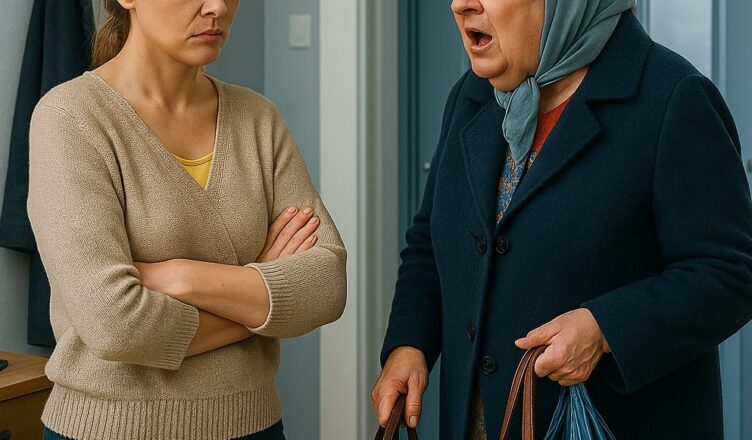
Olga did. Valentina Sergeyevna stormed in, red-faced, determined, shouting.
“How dare you?! How can you abandon family in need?!”
Olga remained calm, watching.
“It’s six a.m., Valentina Sergeyevna. You woke the neighbors.”
“I don’t care! You cut off your phone! You left me no choice!”
“No one asked you to come.”
“You quit! How can you just leave me?!”
“You’re not my mother.”
Her face froze.
“What?”
“You’re Pavel’s mother. He should help you.”
“But he’s unemployed!”
“I know. For three years I’ve carried everything alone.”
“A daughter-in-law must support the family!”
“I owe nothing to anyone.”
She opened the door wide.
“Leave, Valentina Sergeyevna. This conversation is over.”
She stormed off. Threatened, red-faced, fists trembling.
Olga closed the door. Leaned back. Exhaled.
For the first time, the apartment was hers. Silent. Free. Without demands, accusations, or endless requests.
Months later, she found a new job. Slightly less pay, but manageable hours. She spent money on herself. Lived her life.
Family called, threatened, demanded. She listened, politely, then hung up. She didn’t need their permission, their gratitude, or their control.
And for the first time in years, Olga was happy. She had chosen herself. And she never regretted it.